Verification Protocol Evolution and Its Effects on Promotional Offers in Digital Poker Platforms
Taylor Günther · Jun 3, 2026
Verification Protocol Evolution and Its Effects on Promotional Offers in Digital Poker Platforms
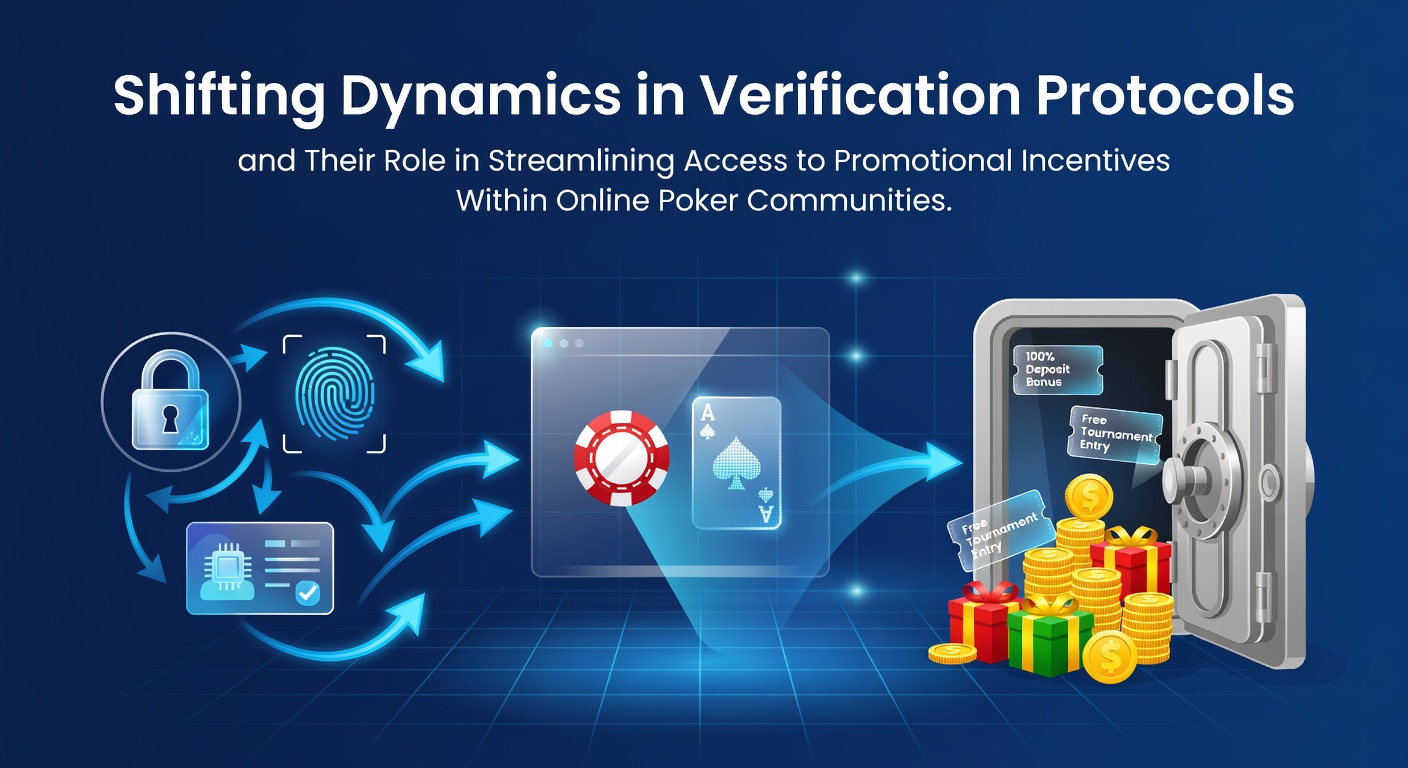
Verification protocols in online poker have undergone notable transformations over recent years, driven by regulatory updates and technological advancements that prioritize both security and efficiency. These changes directly influence how players gain access to promotional incentives such as deposit bonuses, rakeback programs, and loyalty rewards across various digital communities. Data from industry reports indicate that streamlined verification processes now reduce onboarding times while maintaining compliance with anti-money laundering standards and know-your-customer requirements.
Regulatory Shifts Shaping Protocol Updates
Observers note that jurisdictions have introduced refined guidelines that encourage platforms to adopt integrated verification tools, including biometric authentication and real-time document scanning. In June 2026, several North American operators aligned their systems with emerging standards from state-level gaming authorities, allowing faster cross-border player validations without compromising data integrity. Researchers from academic institutions have documented how these adjustments minimize redundant checks, enabling quicker eligibility confirmations for promotional offers.
European frameworks, including those referenced by the Malta Gaming Authority, have similarly emphasized modular verification layers that separate identity confirmation from transaction monitoring. This separation permits poker sites to grant initial access to welcome bonuses once core identity elements are verified, while deferring deeper financial reviews until higher activity thresholds are met. Such approaches have appeared in community discussions where players report smoother transitions from registration to active participation in incentive programs.
Technological Integration and Community Impacts
Platforms increasingly incorporate blockchain-based ledgers and API connections with third-party verification providers, which accelerate data exchanges between poker networks and regulatory databases. These integrations support real-time updates that flag compliance issues before they delay bonus activations. Studies conducted by university research teams reveal that communities utilizing these tools experience higher retention rates among new members seeking promotional incentives.

Community forums highlight examples where automated verification reduced manual review periods from several days to under an hour, directly affecting how swiftly participants claim reload bonuses or tournament entry incentives. Data indicates that players in regions with advanced protocol adoption encounter fewer interruptions when navigating multi-site promotional strategies. Industry organizations such as the European Gaming and Betting Association have published findings on these efficiencies, noting correlations between protocol modernization and expanded access to tiered reward structures.
Effects on Incentive Structures and Player Behavior
Promotional access now hinges on verification completion rates that platforms track through centralized dashboards, allowing operators to adjust bonus terms dynamically based on verified user segments. This flexibility supports targeted offers, such as crypto-specific incentives for players who complete enhanced verification steps. Reports from Canadian regulatory bodies show that such targeted approaches maintain high compliance levels while expanding participation in loyalty schemes.
Those who have examined transaction patterns observe that verification bottlenecks historically limited bonus uptake among casual players, yet updated protocols have shifted these dynamics by incorporating progressive verification models. Initial light checks unlock basic promotions, while subsequent layers unlock advanced incentives without requiring full re-verification. This tiered method appears in multiple online poker ecosystems, where data shows increased engagement metrics following implementation.
Conclusion
Verification protocol developments continue to intersect with promotional systems in measurable ways, as evidenced by regulatory reports and platform analytics through mid-2026. These evolutions facilitate more direct pathways to incentives while upholding necessary oversight frameworks across global poker communities. Continued monitoring of these intersections provides ongoing insights into access patterns and compliance outcomes.