Regional Variations in Cryptocurrency Wallet Integration Across Leading US Poker Platforms
Yara Hughes · Aug 5, 2026
Regional Variations in Cryptocurrency Wallet Integration Across Leading US Poker Platforms
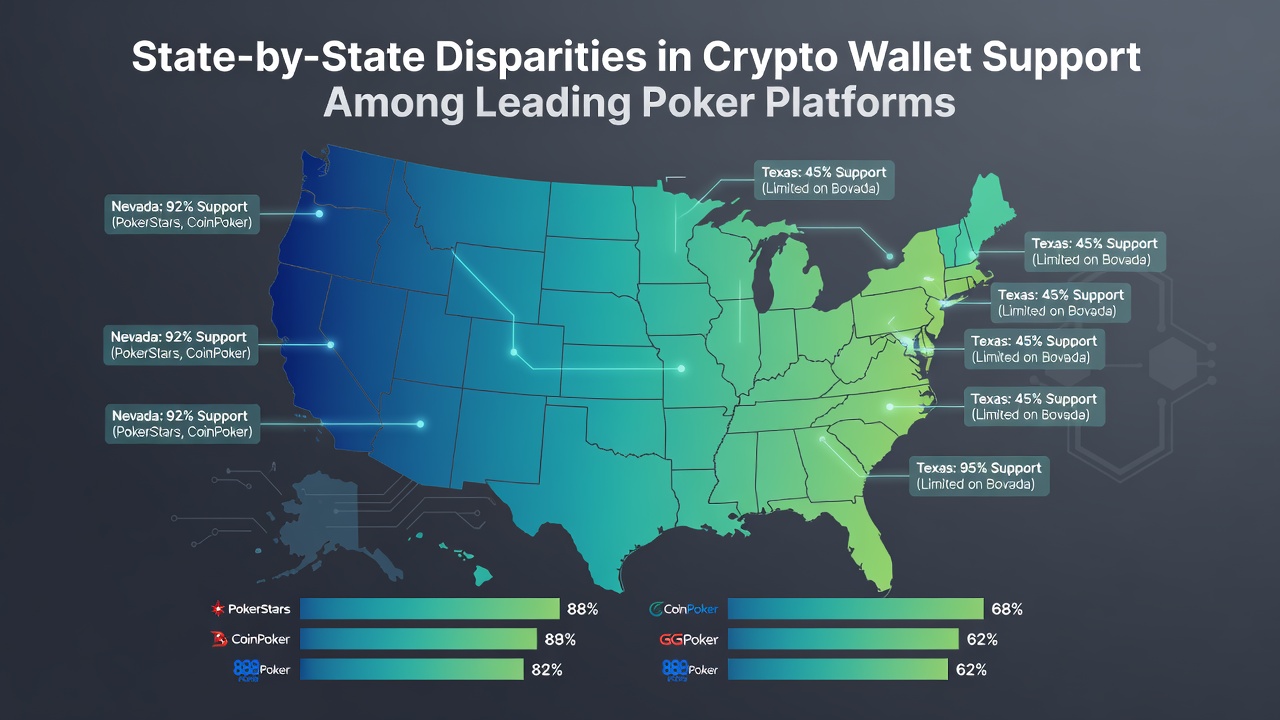
State regulations create distinct patterns in how major poker platforms handle cryptocurrency wallet support, with differences emerging from licensing rules, payment processing standards, and enforcement priorities that vary widely across the country. Observers note that platforms must navigate these frameworks carefully when deciding which wallets to enable for players in specific jurisdictions, and data from industry reports shows uneven adoption rates as a result.
Regulatory Foundations Shaping Wallet Availability
Each state sets its own parameters for online poker operations, and these choices directly influence whether platforms integrate wallets such as Bitcoin, Ethereum, or USDC. In states with established regulatory bodies, operators often receive clearer guidance on acceptable digital asset handling, while elsewhere the absence of specific statutes leaves platforms relying on broader financial services laws. Research from academic studies indicates that this patchwork approach leads to selective feature rollouts, with some regions seeing full wallet support and others limited to traditional banking rails only.
Platforms respond by adjusting their backend systems on a per-state basis, and those adjustments become visible in the payment options presented to users during registration and cashout. Figures from regulatory filings reveal that states with explicit digital currency provisions tend to attract more platform investment in wallet infrastructure, whereas restrictive environments prompt companies to maintain legacy payment methods as the default.
Key State Examples and Platform Responses
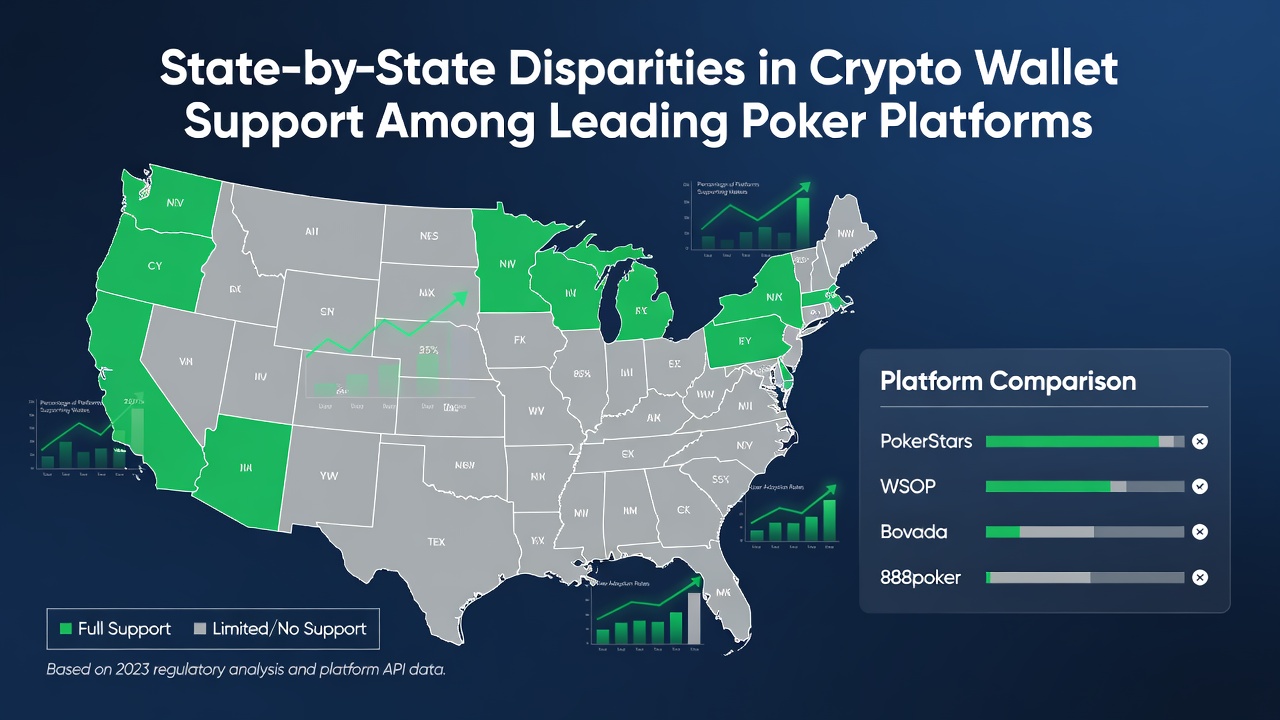
Nevada maintains a mature framework that permits certain crypto integrations through licensed operators, allowing leading platforms to offer multiple wallet types without additional state-level approvals. New Jersey follows a similar model yet imposes stricter verification layers that some providers address by limiting wallet options to those with built-in compliance tools. California presents a contrasting case where the lack of statewide online poker legislation forces platforms to operate under different assumptions, often resulting in reduced crypto wallet availability compared to regulated markets.
Texas and Florida illustrate further divergence, with operators there frequently citing federal banking guidance when deciding against broad wallet support. Data indicates that players in these states encounter fewer supported cryptocurrencies during deposit flows, and platform announcements from August 2026 highlight continued monitoring of legislative proposals that could shift these dynamics. Meanwhile, states like Pennsylvania and Michigan have incorporated crypto provisions into their gaming regulations, enabling platforms to expand wallet compatibility more readily.
Platform-Specific Adaptations
Leading platforms implement state-aware systems that detect user location and surface only the wallets permitted under local rules. One operator, for example, activated Ethereum support across regulated East Coast markets while maintaining Bitcoin-only access in states still developing their frameworks. Another platform adjusted its withdrawal thresholds in August 2026 to align with updated state reporting requirements, a change that affected users in multiple jurisdictions simultaneously.
Impact on Player Experience and Platform Strategy
These disparities affect how players interact with poker sites, since wallet availability determines transaction speed and fee structures. In states where platforms support a wider range of cryptocurrencies, users report smoother funding processes according to aggregated user data, while in more restrictive areas players often default to bank transfers or prepaid options. Industry organizations have documented these patterns through surveys that track adoption rates across different regulatory environments.
Platform operators allocate development resources based on market size and regulatory clarity, and this allocation shows up in rollout schedules. States with stable rules receive priority for new wallet features, whereas emerging markets see slower integration. Observers note that such prioritization creates feedback loops where popular platforms reinforce their position by offering more options in friendly jurisdictions.
Looking Ahead to Policy Developments
Legislative activity scheduled for late 2026 may alter the current landscape, particularly in states considering updates to their gaming statutes. Platforms have already signaled preparedness to expand wallet support once new rules take effect, and analysts track these potential changes through public filings. External resources such as reports from the National Council on Problem Gambling provide additional context on how payment method availability intersects with consumer protection standards across regions.
Conclusion
State-by-state differences in crypto wallet support reflect the broader regulatory environment governing online poker, and these variations continue to shape platform offerings and user options. As new legislation emerges and platforms refine their systems, the distribution of supported wallets will likely shift in response to evolving requirements. Data from ongoing regulatory filings and industry analyses shows that alignment between state policy and platform capabilities remains a key factor in determining which digital assets become accessible to players in each jurisdiction.