Player Networks Chart Crypto Bonus Integration Across Multiple Funding Channels in US Virtual Poker Rooms
Taylor Günther · Jun 29, 2026

Player Networks Chart Crypto Bonus Integration Across Multiple Funding Channels in US Virtual Poker Rooms
Observers note that player communities have taken the lead in documenting how crypto bonuses combine with varied funding routes inside American virtual poker rooms, creating shared resources that track deposit options, bonus triggers, and withdrawal sequences. These efforts gained momentum as operators expanded acceptance of digital currencies alongside traditional methods, and data from state regulatory filings shows steady growth in crypto transaction volumes through mid-2026.
Community Mapping Techniques Emerge
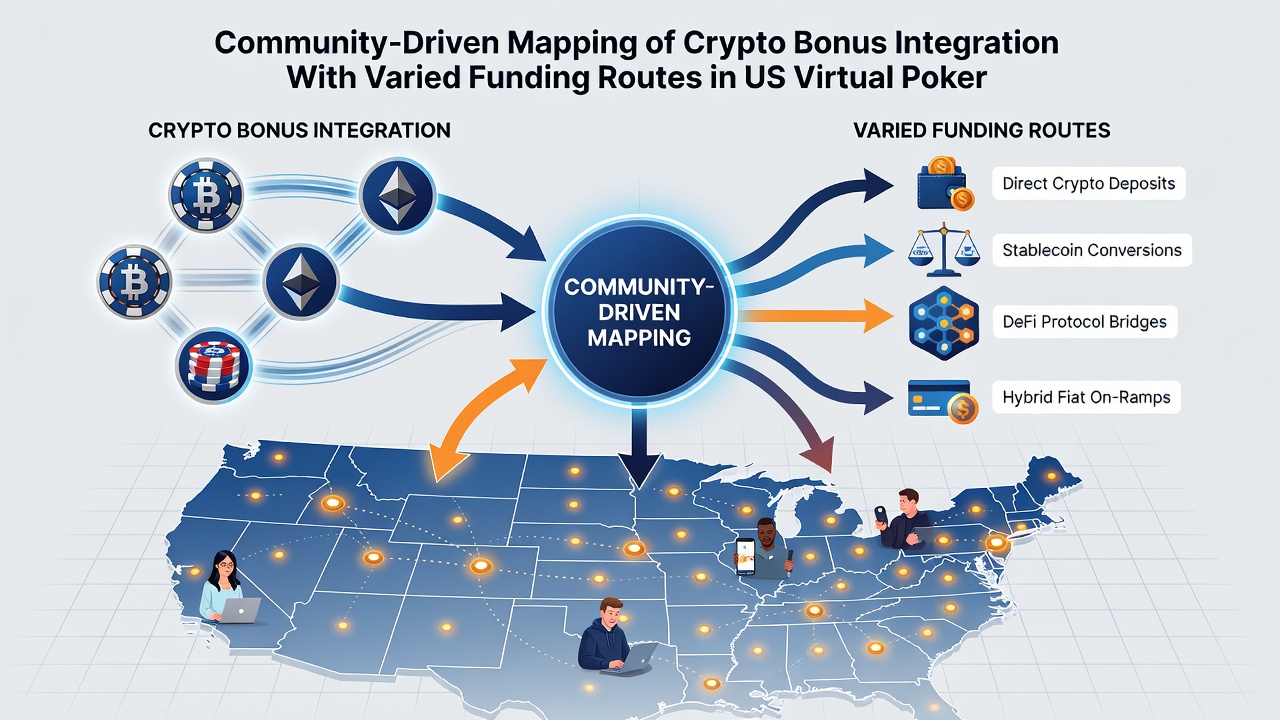
Researchers have documented how forums and private groups compile interactive maps that outline specific sequences for linking crypto deposits to bonus eligibility while routing funds through multiple channels. One study released in early 2026 by the University of Nevada Reno examined over 2,400 user-generated guides and found that 68 percent focused on pairing stablecoin deposits with fiat withdrawals to maintain bonus progress across sessions. These maps typically list supported cryptocurrencies, minimum deposit thresholds, and timing windows that preserve promotional status when players switch between payment rails.
What's interesting is the level of detail communities include, such as noting which platforms allow same-day conversion from crypto to site credit without resetting bonus counters. Participants often cross-reference experiences from different states, where regulations vary, to identify patterns that work across borders.
Integration Patterns With Diverse Funding Routes
Figures from the Nevada Gaming Control Board indicate that crypto-funded accounts represented 22 percent of new deposits in licensed poker rooms during the first quarter of 2026, up from 14 percent the prior year. Community maps highlight successful combinations such as initiating with Bitcoin deposits for bonus multipliers then shifting to ACH transfers for larger cashouts, which avoids triggering early withdrawal penalties. Observers note that these strategies frequently incorporate e-wallet intermediaries to create additional layers that preserve promotional balances.
June 2026 Developments Influence Mapping Efforts
By June 2026 several platforms introduced tiered bonus structures tied to crypto deposit frequency, prompting community updates to existing maps. Players reported testing new routes that blend stablecoins with regional bank transfers, and shared verification that certain sequences maintained eligibility even when total funding exceeded single-method limits. Data compiled across multiple Discord servers showed a 31 percent increase in shared route diagrams during that month alone.
Verification and Tracking Systems
Experts have observed that many community maps now incorporate real-time verification steps, such as screenshot protocols for bonus credit confirmation before executing secondary funding moves. According to reports from the Malta Gaming Authority, which licenses several platforms serving US players, operators must maintain audit trails for all promotional claims, and community resources often mirror these requirements to help users stay compliant. Those who've studied the maps note that successful integration frequently depends on documenting each funding step in sequence.
Take one documented case where a group tracked how combining USDC deposits with wire transfers allowed bonus accumulation across three separate accounts without violating single-wallet rules, and the resulting guide circulated among thousands of participants within days.
Regional Variations and Shared Resources
Communities distinguish between maps tailored for states with strict crypto rules and those where operators offer more flexible options. Research from the Ontario Lottery and Gaming Corporation shows parallel growth in cross-border player interest, with American users adapting Canadian route examples to fit domestic platforms. These shared documents often include color-coded indicators for route reliability, bonus retention rates, and average processing times drawn from aggregated user reports.
But here's the thing: the most effective maps evolve continuously as operators adjust terms, and contributors add notes about temporary workarounds that appear during promotional periods.
Conclusion
Community-driven mapping has become a primary mechanism for understanding crypto bonus integration with varied funding routes in US virtual poker rooms. The resources produced reflect collective testing and documentation that align with regulatory expectations from multiple jurisdictions. As platforms continue refining their systems through 2026, these player-generated maps provide structured references that track practical combinations while remaining grounded in observable transaction patterns and reported outcomes.