Overlapping Verification Challenges in Stacking Bonuses Across Crypto and Fiat Channels in US Card Rooms
Taylor Günther · Aug 19, 2026
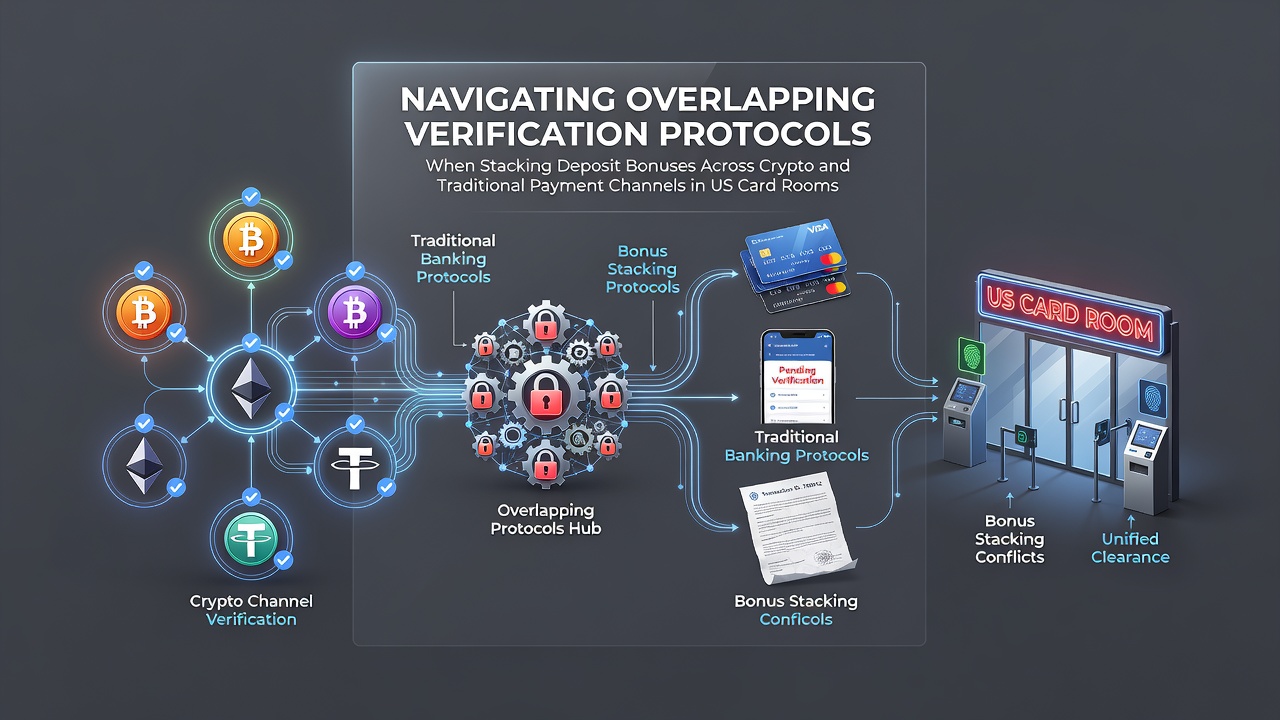
Overlapping Verification Challenges in Stacking Bonuses Across Crypto and Fiat Channels in US Card Rooms
US card rooms have expanded their payment ecosystems in recent years, and players now combine cryptocurrency deposits with traditional channels such as ACH transfers and credit card transactions to access multiple deposit bonuses simultaneously, yet this practice triggers layered verification requirements that often intersect at unexpected points.
Payment Channel Basics and Bonus Stacking Mechanics
Traditional payment methods typically require address verification, bank statement uploads, and identity document checks that align with state gaming regulations, while crypto deposits add wallet address confirmation and blockchain transaction reviews that platforms must reconcile with the same user profile, and when operators allow bonus stacking the combined activity forces repeated cross-checks on the same data points.
Data from industry reports shows that verification turnaround times average between 24 and 72 hours for fiat channels and 1 to 6 hours for crypto transactions, yet the overlap occurs because most platforms maintain a single verification status that applies across all funding sources, so a pending fiat review can delay crypto bonus eligibility even when the blockchain record clears immediately.
Where Protocols Intersect During Multi-Channel Activity
Observers note that the core friction arises when a player deposits via crypto to claim one bonus and then initiates a fiat transfer for a second promotion, because the system flags the account for re-verification once the total deposit volume crosses internal thresholds, and these thresholds often reset with each new payment method rather than accumulating cleanly across channels.
According to Nevada Gaming Control Board reports, operators must maintain consistent know-your-customer records regardless of funding source, which means a crypto deposit that bypasses certain bank-level checks still requires the same identity documents once the account links to a traditional withdrawal method later.
Case Patterns Observed in August 2026 Operations
During August 2026 several major platforms updated their bonus terms to cap combined deposits across crypto and fiat at 150 percent of the single-method maximum, and this change directly affected verification workflows because the new limits triggered automated reviews whenever users approached the cap from mixed sources, resulting in temporary holds that lasted until compliance teams reconciled the separate transaction histories.

Research from the Canadian Gaming Association indicates that accounts using three or more payment methods within a 30-day window experience 40 percent more verification requests than single-method accounts, and US operators have adopted similar monitoring practices to meet anti-money-laundering standards that apply uniformly to both blockchain and legacy rails.
Practical Navigation Approaches Documented by Players
Those who manage multiple channels successfully often complete full verification on the fiat side first, then add crypto wallets while the primary status remains active, because the pre-approved profile reduces the chance of secondary reviews when the crypto deposit posts, and timing the second deposit after the initial verification clears avoids the overlap window that commonly generates duplicate document requests.
Figures from academic studies on digital payment convergence reveal that platforms using unified verification dashboards cut redundant checks by approximately 35 percent compared with segmented systems, yet many US card rooms still operate separate crypto and fiat portals that do not share status updates in real time, which leaves the burden on the user to monitor both interfaces.
Regulatory Context Shaping Current Practices
State-level rules in Nevada and New Jersey require operators to verify identity before any bonus funds become withdrawable, and because crypto transactions settle faster than ACH transfers the verification clock often starts with the slower channel even when the larger bonus comes from the quicker crypto deposit, creating a situation where players must plan deposit sequences around the strictest protocol rather than the most advantageous bonus.
What's notable is that operators have begun publishing combined verification checklists that list requirements for both crypto and traditional methods side by side, allowing users to prepare documents once and apply them across channels without triggering repeated submissions.
Conclusion
Effective navigation of these overlapping protocols depends on understanding that verification status travels with the account rather than resetting per payment method, and players who sequence their deposits to respect unified review cycles encounter fewer interruptions when stacking bonuses across crypto and traditional channels in US card rooms.