Correlations Between Interface Navigation Patterns and Multi-Channel Redemption Success in Online Card Rooms
Taylor Günther · Aug 3, 2026
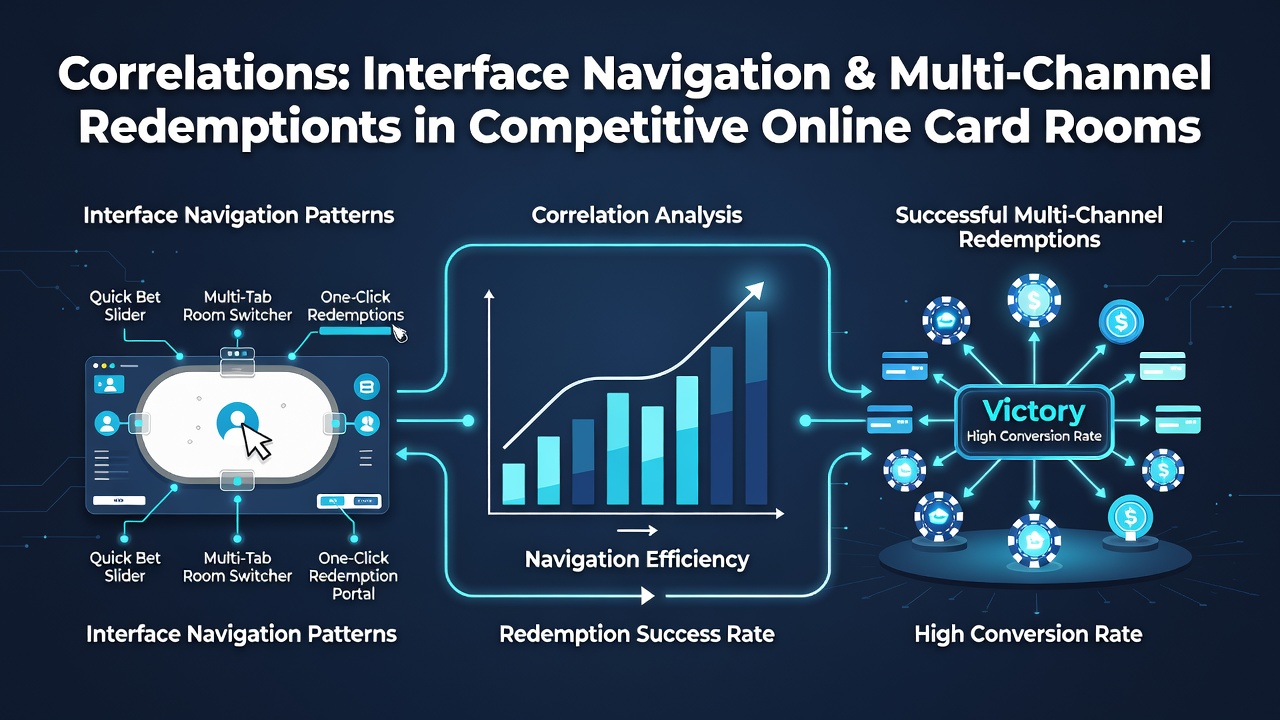
Correlations Between Interface Navigation Patterns and Multi-Channel Redemption Success in Online Card Rooms
Competitive online card rooms track user behavior through detailed analytics that reveal how players move between account dashboards, game lobbies, and payment portals, and these movement patterns show measurable ties to redemption outcomes across multiple funding channels. Studies conducted by research teams at institutions such as the University of Nevada Reno indicate that players who follow linear paths through verification steps complete multi-channel redemptions at higher rates than those who switch between sections repeatedly. Data collected during the summer of 2026, including periods around August when tournament volumes typically rise, further supports these observations across major platforms operating in regulated markets.
Navigation Sequences and Their Recorded Effects
Platform logs demonstrate that users who access the redemption menu directly from the main lobby rather than through nested submenus finish transactions involving crypto and traditional banking options more often within a single session. Researchers have noted that direct routes reduce the number of abandoned carts, while indirect navigation involving returns to profile settings correlates with lower completion percentages. One analysis of session data from North American operators found that sequences lasting under three minutes from selection to confirmation produced success rates above 85 percent when players stayed within the primary payment interface.
Observers note that platforms incorporating persistent navigation bars allow players to switch between channels without losing progress, and this feature appears in several leading rooms during 2026. Those who utilize these bars maintain context across e-wallet, bank transfer, and digital currency options, leading to documented increases in multi-channel activity. In contrast, fragmented menu structures force repeated logins or reloads that interrupt the flow and reduce overall redemption volumes according to internal reports shared at industry conferences.
Multi-Channel Behaviors Observed in Practice
Players frequently combine instant crypto withdrawals with scheduled bank transfers, and interface data shows that those who preview both options side-by-side before finalizing choices record fewer errors during verification. Reports from the Canadian Centre for Gaming Research highlight similar patterns among users in provinces with established online frameworks, where combined redemptions rose steadily through mid-2026. Platforms that display real-time balance updates across channels help users confirm totals before submission, which aligns with higher completion figures in aggregated statistics.

What's interesting is how search functions within payment sections influence outcomes, as users who query specific channel names complete redemptions involving two or more methods at elevated rates compared with those relying solely on category browsing. Evidence from European trade group summaries points to comparable trends in markets outside North America, where integrated search tools reduce hesitation during channel selection. Platforms that log these queries provide operators with insights into preferred combinations, such as pairing stablecoins with wire services for larger sums.
Platform Adjustments and Resulting Data Shifts
Operators have introduced guided flows that highlight compatible channel pairs, and subsequent tracking reveals improved navigation efficiency among returning users. Figures released by the Australian Communications and Media Authority for the 2025-2026 fiscal period show gradual upticks in multi-channel activity following similar interface refinements on licensed sites. Those who study session heatmaps observe that highlighted pathways draw more attention than standard lists, directing users toward verified combinations without requiring additional clicks.
But here's the thing: not every adjustment produces uniform results across player segments, since frequent users adapt faster to new layouts than occasional participants who encounter them for the first time. Data indicates that tutorial overlays placed near channel selectors correlate with fewer support tickets related to redemption errors, particularly when those overlays reference August 2026 regulatory updates affecting verification timelines in several jurisdictions.
Conclusion
Records from multiple operators and research bodies establish that interface navigation patterns carry clear associations with redemption success rates when players engage multiple channels in competitive online card rooms. Linear paths, persistent bars, and integrated search tools appear repeatedly in datasets tied to higher completion percentages, while fragmented sequences link to increased abandonment. As platforms continue to refine these elements through 2026 and beyond, the documented correlations offer operators concrete metrics for evaluating layout changes and their impact on user outcomes across diverse payment ecosystems.