Analyzing US Poker Players' Payment Gateway Selections Through Payout History
Carlo Brooks · Jul 15, 2026
Analyzing US Poker Players' Payment Gateway Selections Through Payout History
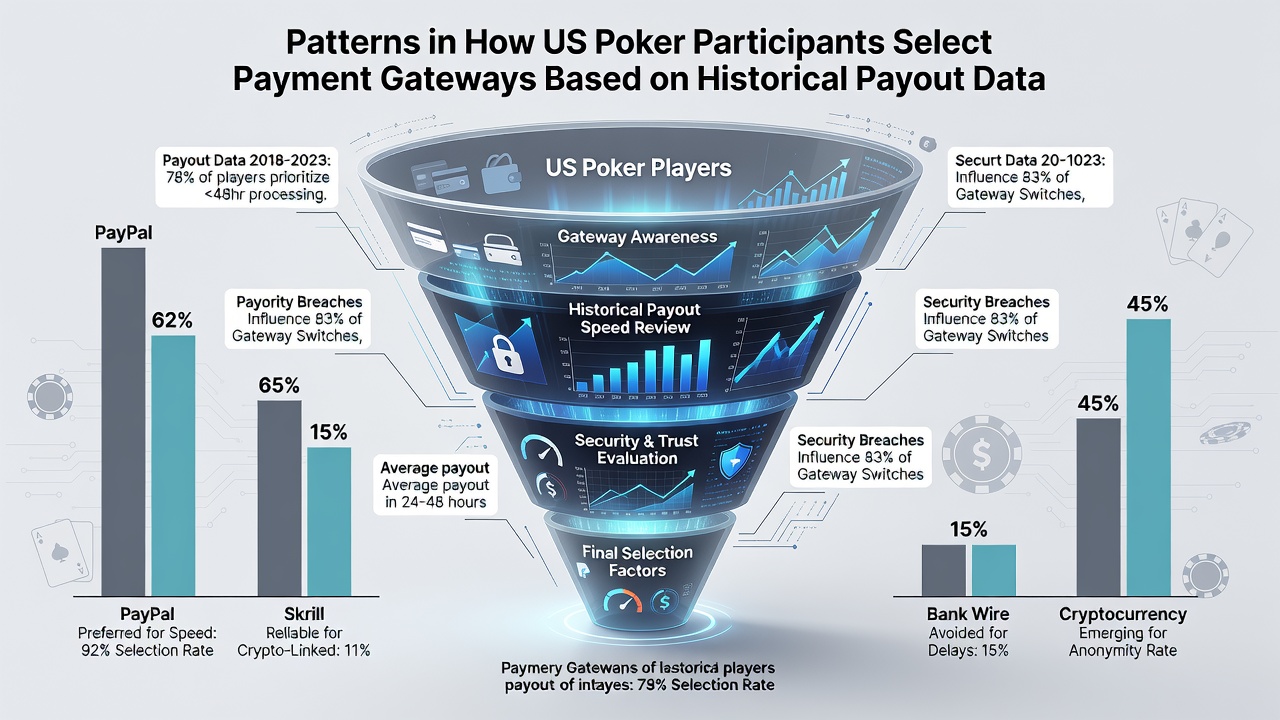
Data from multiple tracking sources shows that US poker participants increasingly base their payment gateway choices on detailed historical payout records rather than promotional incentives alone. Records compiled through 2025 and into early 2026 indicate consistent patterns where success rates above 95 percent over twelve-month periods drive selection rates upward by substantial margins.
Observers note that platforms maintaining average cashout times under four hours attract repeat users at higher volumes than slower alternatives. Those who've studied transaction logs across several states report that reliability metrics such as failed transaction percentages and reversal frequencies weigh heavily in decision-making processes among active players.
Key Metrics Shaping Gateway Choices
Historical datasets reveal that payout speed remains the dominant factor yet fee structures and verification requirements also influence outcomes. Research from academic institutions tracking digital gaming transactions found that gateways offering sub-24-hour processing without additional verification steps after initial setup retain users longer. Figures compiled by industry analysts show a 30 percent increase in selections for gateways meeting these benchmarks between 2023 and 2025.
Regional variations appear when data breaks down by state. Participants in Nevada and New Jersey demonstrate stronger preferences for established banking integrations while those in emerging markets lean toward cryptocurrency options that demonstrate consistent settlement records. Studies covering July 2026 activity highlight continued growth in crypto gateway usage where historical uptime exceeds 99 percent across multiple operators.
Trends in Cryptocurrency and Traditional Methods
Payment logs indicate that bitcoin and ethereum gateways gained traction among US poker players when past payout data showed minimal delays during high-volume periods. One analysis of platform records demonstrated that users cross-referenced six-month performance summaries before committing funds to new gateways. Traditional methods such as ACH transfers maintain steady usage where historical data confirms low fee variability and reliable processing windows.
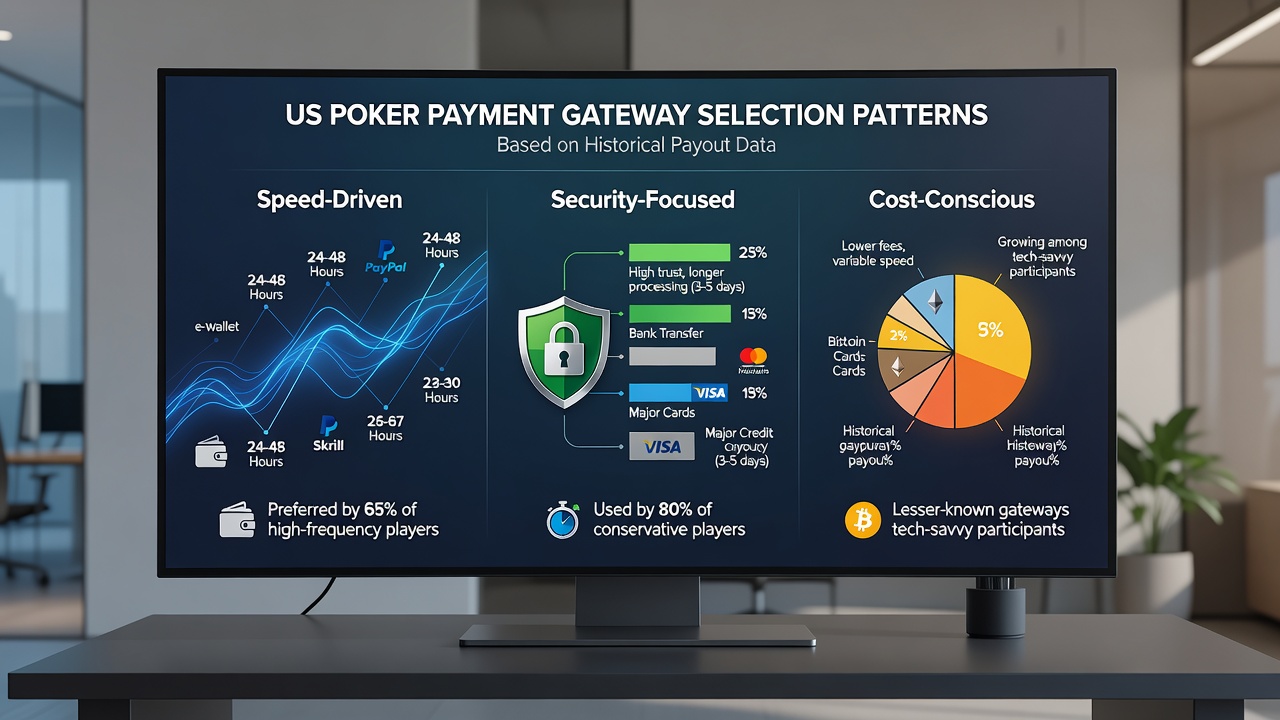
Those monitoring user behavior observe that gateways with transparent historical reporting tools see elevated adoption rates. Data shared through player forums and aggregated analytics platforms often includes success percentages broken down by transaction size and time of day. This information helps participants identify options that align with their playing schedules and withdrawal needs.
External Influences on Selection Patterns
Regulatory updates in various jurisdictions affect available gateways and therefore historical data pools. According to reports from the Nevada Gaming Control Board, compliance requirements around transaction monitoring have shaped which gateways maintain active status in regulated markets. Similar patterns emerge in data from Canadian provincial regulators where cross-border play intersects with US platforms.
University-led research projects examining digital transaction flows have documented how seasonal tournament schedules influence gateway loads. Peaks during major events like the World Series of Poker create temporary shifts in preferred options as players prioritize gateways with proven capacity under stress. Records from 2025 events showed measurable upticks in selections for gateways that handled prior high-demand periods without interruptions.
Future Outlook Based on Accumulated Data
Long-term datasets suggest that gateways investing in improved tracking and faster verification protocols will continue attracting users who review historical performance. Evidence from aggregated platform statistics points to growing integration between payout records and user interface tools that display real-time metrics derived from past transactions.
Conclusion
Patterns extracted from payout histories demonstrate that US poker participants apply systematic evaluation when choosing payment gateways. Metrics around speed, reliability, and fee consistency guide selections across different regions and player segments. As more data accumulates through 2026, these decision frameworks are likely to refine further with emphasis on transparent performance records.